Borrowed Habits, Broken Practice: Why Adopting Another Writer's Process Often Backfires
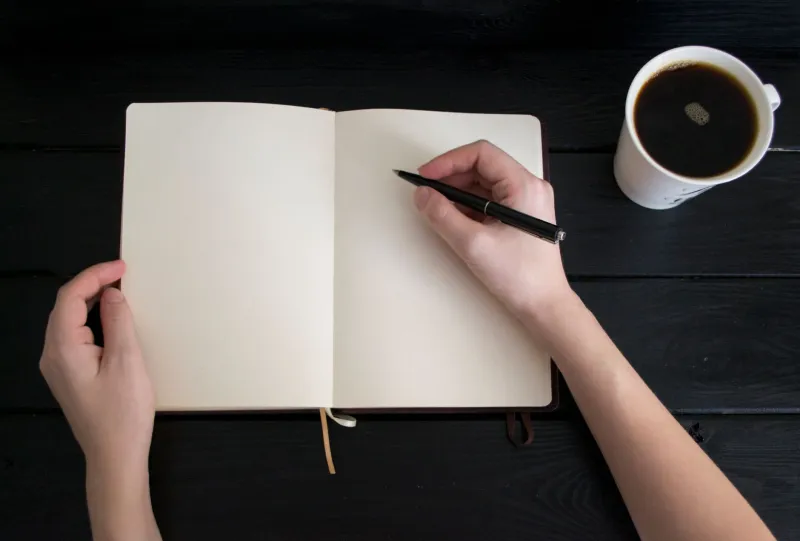
There is a particular kind of despair that arrives not at the blank page but at the bookstore. You are standing in the memoir section, or perhaps scrolling through a long-form interview with a novelist you admire, and you encounter the description of their daily writing life. They rise at four-thirty in the morning. They write longhand in a specific notebook. They refuse to read fiction while drafting. They produce exactly one thousand words before breakfast, then spend the afternoon revising in a sun-drenched study while classical music drifts through the house.
And something in you thinks: that is what a real writing life looks like.
Within a week, you have purchased the same brand of notebook. You have set an alarm you will eventually stop hearing. You are three days into a practice that already feels like wearing someone else's coat—technically functional, but wrong in every way that matters.
This is the comparison trap at its most insidious. It does not announce itself as self-sabotage. It arrives wearing the respectable clothing of discipline and craft.
The Psychology Behind Process Envy
Writers are, by nature, students of human behavior. They observe, catalog, and seek patterns. It is entirely reasonable, then, that when they encounter a successful author's process, they attempt to extract the formula. If the method produced that novel—the one you admire, the one that sold half a million copies—surely the method contains some transferable truth.
This reasoning is emotionally compelling and structurally flawed.
Published authors describe their processes after the fact, often years after the habits took root. What gets communicated in interviews and craft books is a polished, retrospective account of something that was originally messy, accidental, and deeply shaped by circumstances the author may not even consciously recognize. The novelist who writes at four-thirty in the morning may do so because of a colicky infant who is now in college. The writer who drafts exclusively in longhand may have developed that habit during a period when they had no reliable computer access. The thousand-words-before-breakfast rule may have emerged from a deadline crisis a decade ago and simply never been examined since.
Processes are biographical artifacts. They carry the fingerprints of a specific life.
What Is Actually Transferable
This is not to suggest that studying other writers' habits is without value. There is genuine wisdom embedded in how working authors structure their creative lives, but the task is to extract the principle rather than replicate the practice.
Consider the four-thirty alarm. The principle underneath it is likely this: creative work benefits from protection against the encroachments of ordinary life. For a writer with young children and a demanding job, the early morning may be the only window of genuine quiet available. The principle is sound. The specific implementation—rising before dawn—may be entirely incompatible with your biology, your household, or your current season of life.
Similarly, the longhand drafting habit speaks to a principle about slowing down, about creating friction between impulse and output that can deepen the quality of first-draft thinking. That principle can be honored in dozens of ways that have nothing to do with purchasing a particular notebook.
When you encounter a technique that intrigues you, train yourself to ask: What problem is this solving? If the problem it solves is one you actually have, the principle may be worth experimenting with. If the problem belongs to someone else's life entirely, no amount of faithful imitation will produce the desired result.
The Particular Danger of Admiration
Process envy is sharpest when it attaches to writers we genuinely love. There is a desire, not entirely irrational, to understand the conditions that produced work we find extraordinary. If we could reconstruct those conditions, perhaps we could approach something like that quality ourselves.
But admiration is a poor diagnostic tool. The features of a writer's work that move you—their prose rhythm, their structural instincts, their emotional precision—were not produced by their schedule. They were produced by years of reading, revision, failure, and the slow accumulation of craft. The schedule was simply the container. Adopting the container does not transfer the contents.
There is also a subtler danger: when we organize our writing lives around the habits of authors we admire, we implicitly adopt their aesthetic values and creative priorities as our own. A writer whose process is built around solitude and silence may produce very different work than one who writes in coffee shops with headphones in. Neither approach is superior, but each tends to reinforce particular creative instincts. Borrowing a process wholesale means borrowing a set of assumptions about what writing is and how it should feel—assumptions that may actively work against your own creative temperament.
Building a Practice That Belongs to You
The alternative to borrowed process is not chaos. It is honest self-inventory, conducted with the same rigor you would bring to developing a character or plotting a novel.
Begin with constraints rather than ideals. What time do you actually have? What environment do you realistically have access to? What are the non-negotiable demands of your life? A sustainable writing practice is built within actual circumstances, not imagined ones. The writer who commits to three focused hours on Tuesday and Thursday evenings will produce more work over the course of a year than the writer who aspires to daily four-thirty sessions and achieves them approximately twice a month.
Next, examine your creative temperament honestly. Do you draft best when you have a clear structural outline, or does too much pre-planning drain the energy from the actual writing? Do you need variety in your working environment, or does consistency help you drop into the work more quickly? Are you energized by word-count goals, or do they make the writing feel mechanical? These are not questions with universal answers, and any honest response is a legitimate foundation for practice.
Finally, grant yourself permission to iterate. The writing process is not a decision made once and then honored indefinitely. It is a living system that should be adjusted as your life, your work, and your creative needs evolve. The habit that served you through a first novel may be exactly wrong for a second one written in different circumstances. Rigidity in process is not discipline—it is a failure to pay attention.
The Practice You Cannot Borrow
There is one element of a successful writing life that no interview, memoir, or craft book can transfer, and that is the accumulated hours of doing the work. Every technique, every habit, every structural preference that a published author describes was earned through years of showing up—imperfectly, inconsistently, in whatever time and space was available—and writing anyway.
The notebook another writer swears by cannot give you that. The alarm clock cannot give you that. Only the work itself can give you that.
Your writing process will never look like your favorite author's. It will look like yours—shaped by your schedule, your temperament, your constraints, and the specific creative problems you are trying to solve. That is not a limitation. It is the only honest starting point there is.