Polishing the Door While the House Burns Down: Breaking Free From the Chapter One Revision Cycle
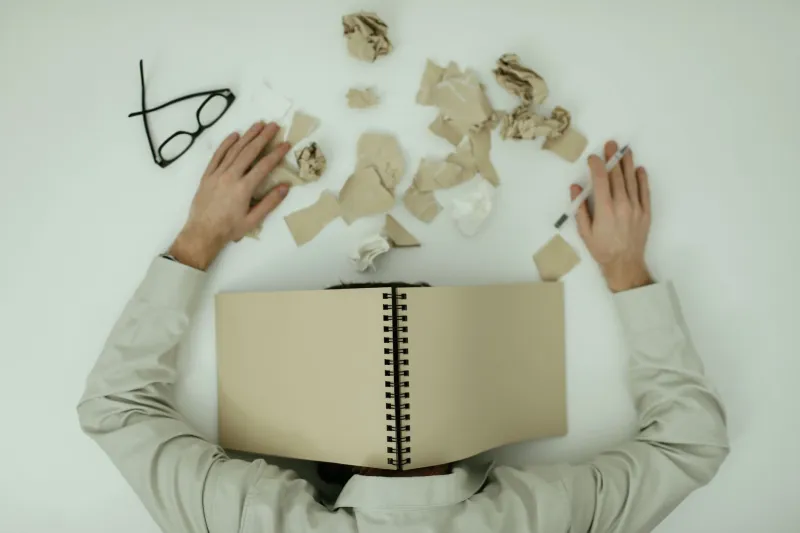
There is a particular kind of writer who has spent three years on a novel and can recite the opening paragraph from memory—not because the book is finished, but because that paragraph has been rewritten forty-seven times. The prose is luminous. The pacing is precise. The hook is, by any reasonable standard, excellent. And the rest of the manuscript stops somewhere around page thirty.
This is the revision trap, and it catches some of the most talented, most earnest writers working today.
Unlike procrastination, which announces itself honestly, the revision trap wears the costume of productivity. You are at your desk. You are working on the manuscript. You are making it better. What could possibly be wrong with that? Quite a lot, it turns out—and understanding why requires looking honestly at what early-chapter revision actually accomplishes, and what it quietly prevents.
Why Chapter One Becomes a Refuge
The opening of any novel is the territory a writer knows best. It has been visited the most, thought about the longest, and revised until every sentence feels like a settled fact. Returning to it carries the comfort of familiarity. The middle chapters, by contrast, are uncertain ground. Characters behave unexpectedly. Plot logic develops cracks. The thematic architecture you imagined in the planning stage does not always hold weight when actual scenes are built upon it.
Given a choice between the known and the unknown, the human mind reliably prefers the former. Revision of early material offers a writer the sensation of forward motion without the discomfort of actual discovery. It is, in psychological terms, avoidance dressed in a work ethic.
Perfectionism accelerates this dynamic considerably. Writers who hold high standards—often the very writers most capable of producing distinguished work—find it genuinely difficult to leave imperfect sentences behind. Moving forward with prose that feels rough or transitional can feel like an act of negligence rather than strategy. But this instinct, however understandable, misunderstands what a first draft is actually for.
The First Draft Is Not a Document—It Is a Discovery Process
A completed first draft is not a polished manuscript waiting to be refined. It is evidence that a story exists. It is proof that the beginning connects, however imperfectly, to an ending. Every scene written past chapter one is information the writer did not have before writing it—information that will, without exception, change how the opening chapters need to read.
Consider the implications of that last point carefully. The character you establish in chapter one will develop, surprise you, and reveal dimensions in chapters twelve and twenty that you could not have anticipated at the outset. The thematic undercurrent you thought you were writing will shift or deepen by the midpoint. The structural choices that seemed correct on page one may need reconsidering once you understand where the story actually lands.
Revising chapter one before the draft is complete is, in a very real sense, revising without sufficient information. You are adjusting the introduction to a conversation you have not yet finished having. The revision you do now may need to be entirely undone once the full shape of the novel becomes clear.
Recognizing When You Are in the Trap
The revision trap rarely announces itself. Writers caught within it often believe, sincerely, that they are simply maintaining quality standards. The following signs suggest otherwise.
You return to the opening chapters after every writing session. If your default mode is to read from the beginning before adding new material, you are spending the majority of your writing time in territory you have already covered.
Your word count grows slowly despite regular effort. If you are writing consistently but the manuscript is not substantially longer than it was several months ago, revision is consuming the gains that new drafting produces.
You feel reluctant to share the manuscript because it is not ready yet. This reluctance is worth examining. A manuscript that exists only in its opening chapters is not nearly ready—but the solution is completion, not further refinement of what already exists.
You find reasons to start over. Some writers escape the revision trap by beginning the novel again from the first page, convinced that a fresh approach will finally produce the opening that allows them to move forward. This restarts the cycle without breaking it.
A Framework for Moving Forward
Breaking the revision cycle requires a deliberate shift in how you relate to imperfect prose. The following approaches have helped writers at various stages navigate past the first act.
Establish a forward-only drafting period. Set a defined stretch of time—four to eight weeks works well for many writers—during which no revision of completed chapters is permitted. New material only. The discomfort of leaving rough sentences behind will diminish as the habit of forward movement strengthens.
Use a draft journal instead of in-manuscript notes. When you notice something in an early chapter that needs attention, write it down in a separate document rather than stopping to fix it. This acknowledges the problem without allowing it to interrupt your momentum. Many writers find that these notes become invaluable during the revision phase that follows a completed draft.
Give yourself permission to write badly. This is harder than it sounds for writers who care deeply about craft, but it is essential. Anne Lamott's concept of the "shitty first draft" remains useful precisely because it reframes rough writing not as failure but as necessary process. The goal of a first draft is not beautiful prose. The goal is a complete story.
Set structural milestones rather than quality benchmarks. Instead of measuring progress by whether a chapter feels finished, measure it by whether you have reached the midpoint, the end of the second act, the climax. Structural completion is a more honest marker of progress than prose quality at this stage.
Remind yourself frequently that real revision begins at completion. The editing work that transforms a novel—the kind that reshapes character arcs, tightens thematic resonance, and makes an opening chapter genuinely earn its place—cannot begin until the full draft exists. Everything before that point is, in a meaningful sense, preparation.
What Waits on the Other Side
Writers who push through to a completed draft consistently report the same experience: the manuscript that exists on the other side bears little resemblance to what they imagined while trapped in those early chapters. Characters clarified. Themes emerged organically. Structural solutions revealed themselves in the writing of later scenes. And the opening chapter—the one that consumed so many months of careful revision—often requires the most substantial rethinking of all, because the completed draft finally made clear what the story was actually about.
The revision trap is, at its core, a failure of trust. Trust in the process, trust in the messy middle, trust in the writer you will be once the full draft is behind you. That writer, the one who has lived with the story from beginning to end, is far better equipped to revise chapter one than the writer who has never left it.
Finish the house before you polish the door. The door will still be there, and you will finally know what it is supposed to open into.