Read Like a Writer, Write Like a Reader: The Generative Power of Annotation
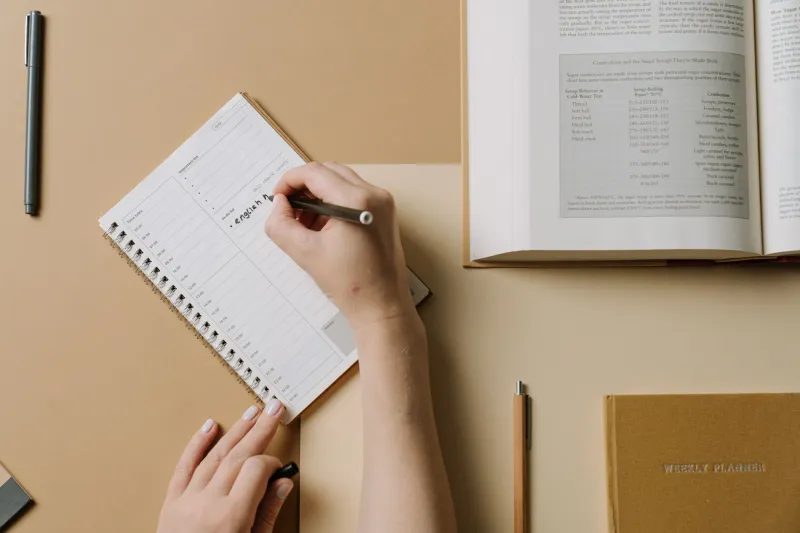
There is a particular kind of reader who cannot move through a book without a pencil in hand. Not to correct, not to grade, but to converse. They underline a sentence that lands unexpectedly hard. They draw a small arrow toward a passage where the rhythm shifts. They scrawl a question in the gutter of the page — why does this work? — and leave it there, unresolved, like a seed pressed into soil.
For most of us, annotation was something teachers assigned. It carried the faint smell of obligation. But strip away that institutional context, and what remains is one of the most quietly powerful habits a working writer can cultivate. Annotation, practiced with creative intent rather than editorial anxiety, transforms reading from a passive act into an active apprenticeship.
The Difference Between Editing Marks and Generative Notes
When writers think about marking up a page, they typically imagine the revision phase: cutting redundant clauses, flagging inconsistencies, circling the weak verb buried in a sentence that almost works. That kind of annotation is valuable, but it is fundamentally reactive. It responds to what already exists.
Generative annotation operates differently. It asks not what is wrong here but what is happening here, and why does it matter to me as a writer? The distinction is subtle but consequential. One mode positions you as a critic standing outside the work. The other draws you inside it, curious and permeable, absorbing technique the way a musician absorbs phrasing by transcribing a solo.
Consider what happens when you read a novel whose pacing consistently surprises you. A generative annotator does not simply note good pacing in the margin. They ask: where does the author slow down, and what information is being withheld at that moment? They track the chapter lengths. They note when a scene ends on action versus reflection. They are, in effect, reverse-engineering a mechanism they want to understand well enough to eventually build themselves.
Annotating Other Writers' Work as a Craft Practice
Reading widely is advice so common it has nearly lost its meaning. But reading annotatively — with a pencil, a notebook beside you, or a digital highlighting system you actually review — transforms the vague instruction into a concrete discipline.
Choose a book that does something you struggle with. If your dialogue tends toward the functional and flat, find a writer whose conversations crackle — Elmore Leonard, Celeste Ng, or Colson Whitehead, depending on your genre and sensibility — and read a chapter with the sole purpose of understanding how they do it. Mark every line of dialogue that surprises you. In the margin, write what you expected the character to say instead. The gap between your expectation and what the author actually wrote is where the lesson lives.
Similarly, if scene transitions feel clumsy in your own work, find a novel that moves between time and place with unusual grace. Annotate the seams. What word or image carries the reader across? Is there a recurring motif that provides continuity? Is the transition abrupt by design, and if so, what emotional effect does that abruptness create?
These are not exercises in imitation. They are exercises in attention. The goal is to internalize a wider vocabulary of technique — one you can draw on intuitively when your own manuscript demands it.
Bringing Annotation Into Your Own Drafts
The practice becomes even more potent when turned inward. Many writers treat early drafts as documents to be survived, moving forward at all costs and reserving judgment for revision. This is sound advice for momentum, but it can leave a writer disconnected from what the draft is actually doing beneath its surface.
Annotating your own work in progress — not to fix it, but to understand it — creates a kind of dialogue between you and the material. Try reading a completed chapter not with your editor's eye but with genuine readerly curiosity. Where did you find yourself engaged? Where did your attention drift? Mark those moments honestly. In the margin, write what you think the scene wants to be, as opposed to what it currently is.
This approach surfaces the gap between intention and execution without triggering the defensive instinct that full revision can provoke. You are not yet dismantling anything. You are simply listening more carefully to what the draft is trying to tell you.
Some writers keep a dedicated annotation notebook — separate from their drafting journal — where they record patterns they notice across their own manuscripts. Do your protagonists tend to go passive at moments of high emotional stakes? Do your endings arrive too quickly, before the resonance has fully settled? Annotation across multiple chapters, reviewed together, can reveal systemic tendencies that a chapter-by-chapter revision would never catch.
Research Materials as a Story Laboratory
Annotation need not be confined to fiction or craft books. For writers working in historical fiction, narrative nonfiction, or any genre that requires research, the materials gathered during that process are themselves rich with story potential.
When reading a biography, a scientific paper, or a collection of primary source documents, the generative annotator is not merely extracting facts. They are asking: what is the story hiding inside this information? A footnote about a minor historical figure might contain more narrative energy than the main text. A throwaway detail about the weather on a particular day might unlock the emotional atmosphere of a scene you have been struggling to render.
Mark those moments. Write beside them not just use this but why this matters — what emotional or thematic truth the detail illuminates. When you return to the draft, you will not be hunting through pages of notes for usable facts. You will find a record of your own creative instincts at their most alert.
Making the Habit Sustainable
Like any craft practice, annotation is only useful if it is actually practiced. A few principles help sustain it without turning it into another form of productive procrastination.
First, keep the tools simple. A mechanical pencil and a book. A highlighter and a notebook open beside your laptop. The friction should be low enough that the habit does not require a setup ritual.
Second, review your annotations. This is where most writers abandon the practice — the notes accumulate and are never revisited. Set aside time, even briefly, to read back through what you have marked. Patterns emerge in retrospect that are invisible in the moment.
Third, let the annotations migrate. A striking observation about sentence rhythm in a book you admired should eventually find its way into your own practice — not as a rule, but as an experiment. The margin note is not the destination. It is the beginning of a conversation that ends, if you are lucky, somewhere in the middle of your own best work.
The margins, after all, have always been where writers think out loud. There is no reason to stop now.