Why the First Page Terrifies You More Than the Last: Dismantling the Mythology of Beginnings

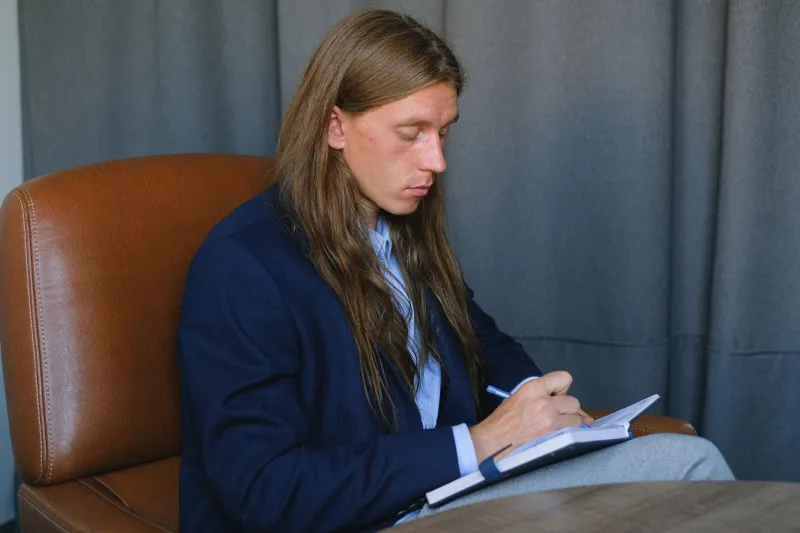
There is a particular kind of stillness that settles over a writer sitting before an empty document. The cursor blinks. The title page — if you've gotten that far — sits like a placeholder for something that doesn't yet exist. You know the story is somewhere inside you. You've thought about it in the shower, during your commute, in the half-conscious minutes before sleep. And yet the moment you are asked to commit a single sentence to the page, the entire edifice seems to collapse under the weight of its own possibility.
This is the blank page paradox: the beginning, which should feel like freedom, instead feels like a locked door.
What makes this phenomenon particularly strange is that most writers who struggle to start do not struggle equally to finish. The final chapters of a manuscript tend to arrive with a kind of momentum — imperfect, exhausted, sometimes messy, but moving. The ending gets written. The beginning, by contrast, can hold a writer hostage for weeks.
Understanding why this asymmetry exists is not merely an intellectual exercise. It is, for many writers, the difference between a novel that gets drafted and one that never leaves the imagination.
The Opening as Audition
One of the most powerful forces at work in the paralysis of beginnings is the belief — conscious or not — that the first page is an audition. Not just for the reader, but for the writer's own sense of legitimacy.
When a writer sits down to draft chapter one, they are often carrying an invisible audience: the agent who might reject it, the reader who might set it down, the workshop peers who might find it derivative, the internal critic who has been sharpening its knives for years. That imagined audience transforms what should be an act of exploration into a performance. And performances require polish. Performances require you to have already figured out what you're doing.
The problem, of course, is that writing a first draft is precisely the process by which you figure out what you're doing. The audition metaphor is fundamentally incompatible with the nature of drafting. It asks you to be finished before you've begun.
By contrast, when a writer is deep in the middle of a manuscript — or pressing toward its conclusion — the audience has receded. The story has its own gravity by then. You are no longer auditioning; you are reporting. The momentum of what has already been written carries you forward in a way that the blankness of the opening simply cannot.
The Myth of the Perfect First Line
American literary culture has a complicated relationship with the famous opening line. We celebrate them. We teach them. We list them in listicles and quote them at dinner parties. Call me Ishmael. It was the best of times, it was the worst of times. Happy families are all alike; every unhappy family is unhappy in its own way.
This reverence is not without merit — a strong opening line does real work. But for the writer in the drafting stage, the mythology around first lines has become something closer to a curse. The pressure to produce something quotable, something anthologizable, before the story has even taken shape is an expectation that serves no one.
Here is what the mythology obscures: most celebrated first lines were not written first. They were discovered — sometimes rewritten dozens of times, sometimes found buried in page forty of an early draft and moved to the front during revision. The opening line of a finished novel is a product of revision, not inspiration. Treating it as a prerequisite for drafting is like requiring a finished roof before you've poured the foundation.
Permission to write a bad first line is not a consolation prize. It is, in many cases, the only honest way to begin.
Why Endings Feel Easier (Even When They're Not)
It would be an overstatement to claim that endings are easy. They are not. Conclusions carry their own specific pressures — the need to honor what has come before, to satisfy without being predictable, to close loops without foreclosing meaning. Many writers find the final chapters of a novel among the most technically demanding they will write.
And yet, for most writers, endings do not produce the same paralysis as beginnings. Why?
The answer lies in context. By the time a writer reaches the final act, the story has generated its own constraints. Characters have made choices that limit future choices. Themes have emerged organically from the material. The world of the novel has established its own internal logic. The writer is no longer working in a vacuum of infinite possibility — they are working within a system. That system, far from being limiting, is liberating. It tells the writer what belongs and what doesn't. It narrows the field.
The blank page offers no such guidance. Every choice at the beginning is made without the scaffolding that only the story itself can provide. This is genuinely harder. But it is not harder in the way most writers believe — it is not harder because the stakes are higher or because the writing must be better. It is harder simply because it is earlier. The difficulty is structural, not moral.
Reframing the Opening as Archaeology
One of the most useful conceptual shifts a writer can make is to stop thinking of the opening as a construction project and start thinking of it as an excavation. You are not building something from nothing. You are uncovering something that already exists — something that will only become visible as you dig.
This reframe has practical implications. It suggests that the first draft of chapter one is not the chapter one you will ultimately publish. It is a probe. It is a first pass of the shovel. Its job is not to be good; its job is to be informative. What does this character sound like when they speak? What does this world feel like when you inhabit it? What does this story want to be?
Those are questions you cannot answer before you write. They are questions the writing itself will answer, given the chance.
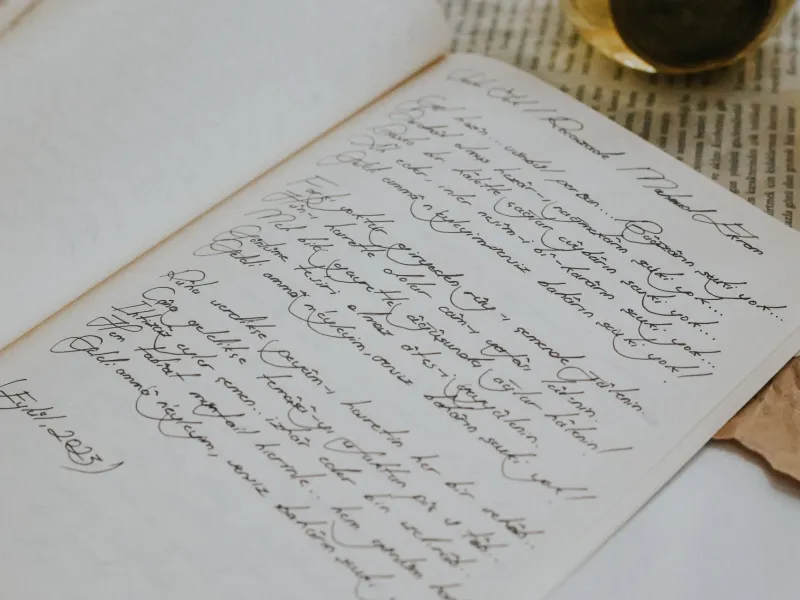
Many experienced novelists have adopted the practice of writing what they call a "zero draft" — a pass through the material so provisional, so explicitly not-for-anyone, that it dissolves the performance anxiety entirely. Some writers address this draft directly to themselves in a journal format. Others simply label the document with a note that reads, in effect, this doesn't count yet. The psychological trick is crude, but it works. It separates the act of discovery from the act of execution.
Starting in the Middle, Then Finding the Beginning
Another strategy worth considering: don't start at the beginning at all.
For writers who find themselves locked at chapter one, it is often more productive to begin with the scene they can see most clearly — regardless of where it falls in the narrative sequence. Write the confrontation in act two. Write the conversation you've been hearing in your head for months. Write the ending, if that's what's vivid. The material you generate will begin to illuminate what the opening needs to be in a way that no amount of staring at a blank page ever will.
This is not avoidance. It is a legitimate drafting strategy with a long history among working novelists. The opening, once you have a clearer sense of the whole, often writes itself — or at least stops being the impossible object it once appeared.
The Page Was Always Going to Be Blank First
At its core, the blank page paradox is a crisis of permission. Writers withhold from themselves the right to be uncertain, to be awkward, to be wrong in the early pages. They demand a quality of execution that is only possible after the story has been written — and then wonder why they cannot begin.
The blank page is not an obstacle. It is the necessary condition of everything that follows. Every novel you have ever read — every one that moved you, challenged you, stayed with you — was once exactly as empty as the document open on your screen right now.
The page was always going to be blank first. Your only job is to make it a little less blank than it was before you sat down.